
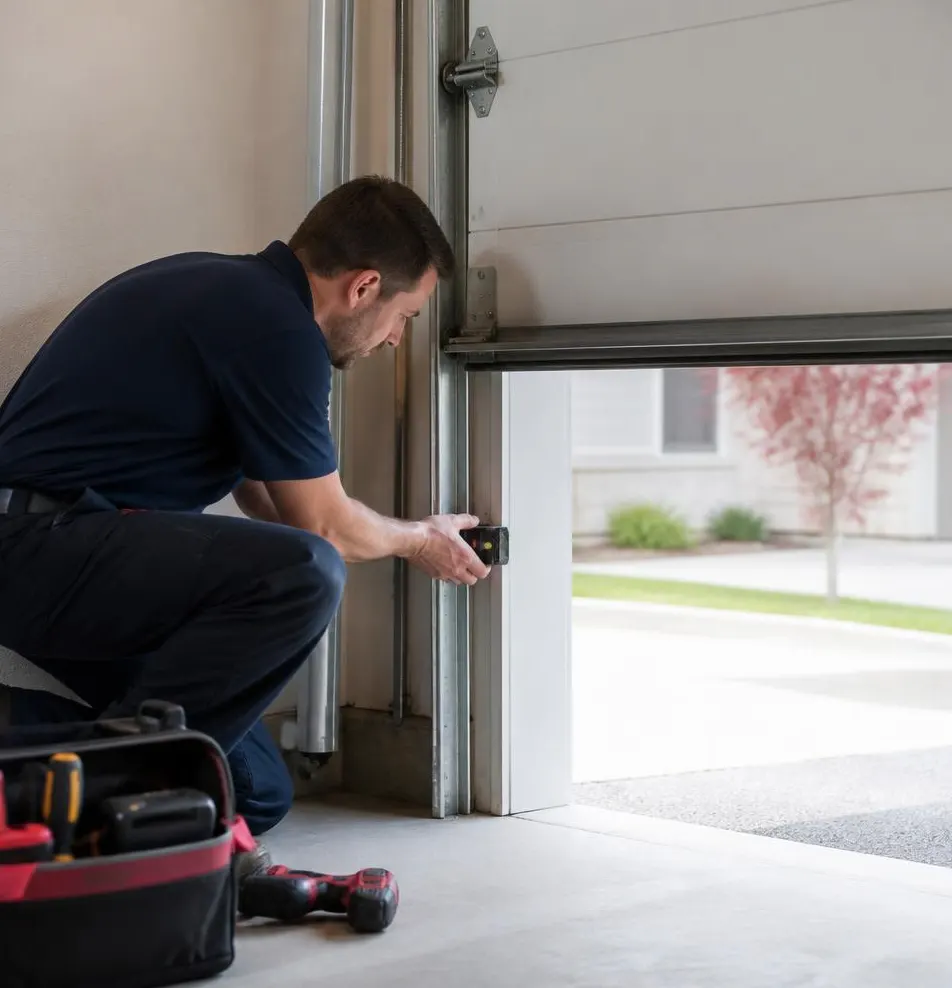
The Mistake Almost Everyone Makes First
The door won't open, the opener is clicking or humming uselessly, and there's a bright red handle hanging down with a label that says "emergency release." So people pull it. Right away, without thinking twice. It's an understandable move — the cord is designed to be grabbed, and in the moment it feels like the obvious fix for any garage door that isn't cooperating.
The problem is that the cord doesn't fix anything. It just disconnects the door from the opener. If the door was already being held up by something other than the opener — namely, a spring in good condition — that's fine. But if the spring is broken, weak, or the door is off its tracks, pulling that cord removes the one thing keeping a 100 to 400 pound door from dropping straight down.
What the Cord Actually Does
The emergency release disconnects the trolley from the opener's drive carriage. Once it's pulled, the opener motor is no longer attached to the door at all. The door is now a purely manual, spring-operated mechanism, exactly like garage doors before automatic openers existed. If the springs are doing their job, you can lift and lower the door by hand with one or two fingers of effort. If the springs are not doing their job, you're now holding up the full weight of the door with your arms, and that rarely ends well.
When Pulling the Cord Makes Things Worse
- A broken spring. This is the big one. If a torsion or extension spring has snapped, the door has no counterbalance left. Disconnecting the opener means nothing is holding the door up except gravity, which pulls it down fast and hard.
- An off-track door. If a panel has jumped the track — something that happens more often here after high winds shift the rollers or warp a track slightly — releasing the opener doesn't straighten anything. It just lets a misaligned door move freely, which can cause it to twist, bind, or fall out of the frame entirely.
- Storm damage you haven't inspected yet. After a hard blow, a door can look fine but have a bent track, a cracked panel, or hardware that's barely hanging on. Pulling the cord before checking any of that is asking the door to fail while you're standing under it.
- Swollen or corroded track hardware. Humidity and salt air cause rust on track bolts and rollers, and wood or composite doors can swell slightly in a wet stretch of weather. A door that's binding in the track for either reason may jerk or drop unevenly once it's freed from the opener's steady pull.
When Pulling the Cord Is the Right Call
The cord earns its keep when the opener itself is the problem and the rest of the system is sound — for example, a burned-out motor, a stripped gear, or a power outage when you need to get a car out before an evening storm rolls in. In those cases, the door is still properly balanced on healthy springs; it's just the motor that quit.
Before you rely on manual operation, do a quick balance check:
- Close the door fully, if it's not already closed.
- Pull the release cord.
- Lift the door by hand to about waist height and let go.
A properly balanced door will stay put or drift down only slightly. If it slams down or shoots upward on its own, something is wrong with the springs or cables, and you should not keep operating it manually. Reconnect the opener (or leave it disconnected but don't force the door) and call for a spring inspection.
How to Use It Without Getting Hurt
If the balance check passes and you need to operate the door manually for a while — say, during an extended outage — keep a few things in mind. Always use two hands on the bottom section of the door, never on a panel seam or window. Lift and lower smoothly rather than letting gravity do the work. Keep kids and pets clear of the opening while you're operating it, since a manually run door has no auto-reverse safety sensors working through the opener. And when power comes back, pull the cord toward the door (or follow the arrow printed on the release mechanism) to re-engage the trolley, then run the opener through one full cycle to confirm it's reconnected properly before trusting it again.
A Note for Humid, Storm-Prone Areas
In this part of Florida, the cord housing and the cable it rides on are two of the first things to show rust after a few seasons of afternoon downpours and salt-laden air, especially on doors closer to open fields or water. A stiff, sticky, or hard-to-pull release cord is often an early sign of corrosion in the mechanism, not just dirt. That's worth mentioning at your next tune-up rather than waiting for it to seize up during an actual outage.
When to Call Precision Garage Door of Intercession City
If pulling the cord revealed a door that drops fast, feels unbalanced, or won't stay in place, don't keep forcing it open and closed by hand. That's a job for our Garage Door Spring Repair service — springs under tension are dangerous to replace without the right bars and experience. If the door jumped the track entirely, our Off Track Door Repair technicians can get it realigned and check the rollers and track for storm or moisture damage before it becomes a bigger failure. Either way, we'll test the balance and the release mechanism itself so you know the cord will actually do its job the next time you need it.
If your garage door isn't behaving the way it should, give Precision Garage Door of Intercession City a call. We serve homes and businesses throughout Intercession City, FL and the surrounding area, and we'll get it diagnosed and fixed right the first time.