
Standing in Someone Else's Garage, Minutes Before You Sign
You're doing the final walkthrough. The agent is checking their phone, the inspector's report is already filed, and you're standing in the garage because it's the last stop before the closing table. You hit the wall button out of habit. The door shudders halfway up, there's a metallic groan from somewhere near the top, and it finally clears the opening — a little crooked. Nobody else seems to notice. That's because most home inspectors test whether the door opens and closes, not whether it's actually sound. In a climate like ours, where humidity swells wood trim, afternoon storms drive water against the bottom seal, and summer heat cycles metal parts open and shut, a garage door can look fine and still be a few months from a real repair bill.
Here's what to check yourself, in ten minutes, before you own the problem.
The Checklist
1. Look at the springs — both the metal and the mounting
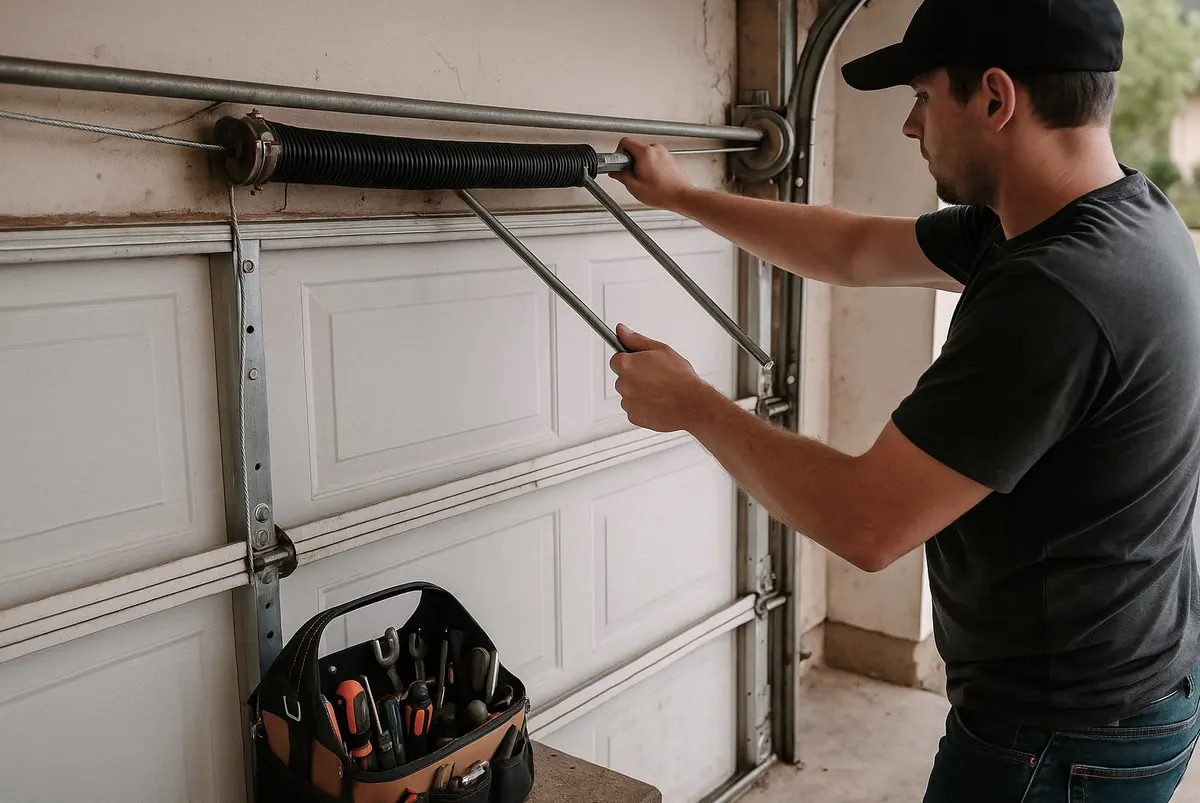
Torsion springs sit on a bar above the door; extension springs run along the upper tracks on either side. Look for rust pitting, gaps between coils, or a spring that looks too small for the door's weight. A failing spring won't always snap dramatically — sometimes it just loses tension, which is why the door you tested felt like it was struggling halfway up. If this fails: you're looking at a spring replacement, and a mismatched or undersized spring is a sign someone did a cheap repair in the past rather than a proper one.
2. Run the balance test
Pull the release cord to disconnect the opener, then lift the door manually to about waist height and let go. A balanced door stays put. One that falls shut or flies up means the springs are compensating incorrectly for the door's weight. If this fails: the opener has been doing work it shouldn't, which shortens its life and explains premature gear or motor wear.
3. Check the bottom panel and the first two feet of track for rust
This is the zone that takes the most moisture — splash-back from downpours, condensation, and ground humidity. Surface dust is normal; flaking rust or soft, swollen panel material is not. If this fails: the panel is likely weaker than it looks, and in storm-force wind it's the first spot to buckle.
4. Find the wind-load label
Somewhere on the end stile or in the owner's paperwork, a garage door sold for this part of Florida should carry a wind-load rating. Inspectors often skip this entirely because it's not a safety-of-life item on their checklist — it's a storm-readiness item. If it's missing or you can't find it: assume the door may not meet current wind-load expectations for hurricane season, and budget for either reinforcement or replacement before the next storm system rolls through.
5. Check the rollers and hinges by hand
Grip a roller and wiggle it — there should be a little play but no grinding feel. Look at the hinges for cracks or stretched screw holes. Galvanized or nylon rollers hold up better against moisture than bare steel. If this fails: expect noise now and a jammed or off-track door later, especially after a humid stretch swells the wood jambs around it.
6. Test the auto-reverse safety sensors
Close the door and wave a hand or place a block of wood in its path, below knee height, near the photo-eye sensors on either side of the track. The door should reverse immediately. If this fails: either the sensors are misaligned — common after a bump from a car or lawn equipment — or they've been disconnected entirely, which is a real safety gap for a home with kids or pets.
7. Press on the weatherstripping along the bottom and sides
It should be pliable, not cracked or compressed flat. Gaps here let in wind-driven rain during our afternoon storms and give insects and small animals an easy way in. If this fails: it's a cheap fix on its own, but it's also a clue about how well the rest of the door has been maintained.
8. Look for daylight gaps when the door is closed
Stand inside with the door shut and the lights off. Thin lines of daylight along one side, but not the other, usually mean the door is slightly off-track or the track itself has shifted. If this fails: it may still operate for a while, but it's wearing the opener and rollers unevenly the entire time.
9. Check the manufacture date or model sticker
Most doors have a label inside, often near the bottom panel or on the end stile, with a production date. A door pushing 15–20 years old has likely outlived its springs at least once already and may be close to needing full replacement, regardless of how it looks today.
10. Listen, don't just watch, during a full open-close cycle
Grinding usually points to roller or bearing wear. A rhythmic thump often means a flat spot on a roller or a bent track. A sharp bang near the top is frequently a spring issue. None of these show up on a visual inspection — you have to run the door and listen.
When to Call Precision Garage Door of Intercession City
If you're under contract and want a second opinion before closing — or you just moved in and some of these items gave you pause — it's worth a real inspection before the first big storm tests the door for you. Precision Garage Door of Intercession City can run a full Garage Door Maintenance & Tune-Up, checking spring tension, track alignment, hardware wear, and the wind-load rating in one visit. If the springs are undersized or already pitted with rust, we'll walk you through a proper Garage Door Spring Repair instead of a patch job, matched to the actual weight and size of your door.
Give us a call before you're guessing about what's behind that panel. We serve homeowners throughout Intercession City, FL and the surrounding Osceola County area, and we're glad to take a look before the door becomes a surprise on your first storm season in the house.